 By Kayla Thompson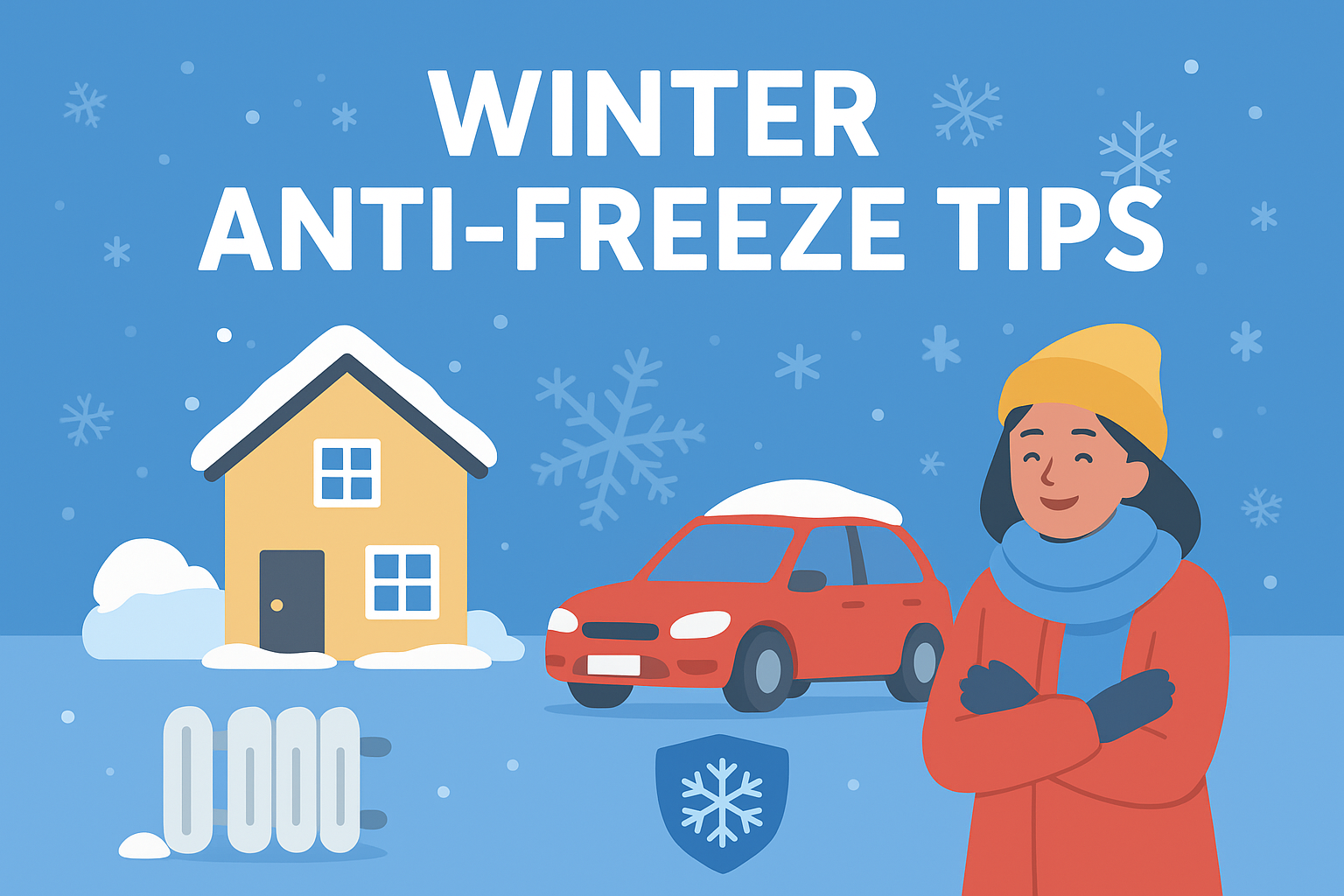
As temperatures drop, winter brings challenges that can affect your home, health, and daily life. Proper preparation can prevent damage, improve comfort, and ensure safety. Here are essential winter anti-freeze tips perfect for homeowners, drivers, and anyone living in colder climates.
🏠 1. Protect Your Home From Freezing Temperatures
🧵 Insulate Exposed Pipes
Pipes in basements, garages, and attics are prone to freezing. Use foam insulation sleeves to keep them warm and reduce the risk of water damage caused by burst pipes.
🚪 Seal Windows and Door Gaps
Cold drafts increase heating costs and reduce comfort. Apply weather stripping or caulk around gaps to keep warm air inside.
🔧 Maintain Your Heating System
Before winter intensifies, schedule an inspection for your heating unit. Replace air filters monthly to ensure efficient airflow and reduced energy waste.
🌡️ Keep Indoor Temperature Stable
Even when you’re away, set your thermostat to at least 55°F (13°C) to prevent frozen pipes.
🚗 2. Winterize Your Vehicle
🧪 Check Antifreeze Levels
Ensure your vehicle has the proper antifreeze mix—typically 50/50 coolant and water—to prevent engine freezing in extreme cold.
🛞 Inspect Tires and Battery
Cold weather lowers tire pressure and weakens older batteries. Inflate tires to recommended levels and test your battery to avoid unexpected breakdowns.
🎒 Prepare a Winter Emergency Kit
Include blankets, gloves, a flashlight, jumper cables, energy bars, bottled water, and a portable charger.
🧑⚕️ 3. Protect Your Skin and Overall Health
🧴 Use a Thick Moisturizer
Cold, dry air pulls moisture from your skin. Apply a rich moisturizer daily and use lip balm to avoid cracked lips.
💧 Hydrate Regularly
Even in winter, dehydration is common. Drink warm water or herbal tea to stay hydrated and comfortable.
🧥 Layer Your Clothing
Start with moisture-wicking base layers, add insulating layers, and finish with a windproof outer jacket. Don’t forget gloves, scarves, and hats.
❗ 4. Winter Outdoor Safety
⚠️ Prevent Slips and Falls
Wear slip-resistant boots and apply salt or sand to icy walkways.
🧹 Shovel Snow in Intervals
Clearing snow multiple times is safer than waiting for heavy accumulation. It reduces strain and lowers injury risk.
🥶 Watch for Frostbite and Hypothermia
If you notice numbness, pale skin, or uncontrollable shivering, go indoors immediately.
💡 5. Save Energy During Winter
🪟 Use Heavy Curtains
Open them during the day to capture natural warmth, then close them at night to block out cold air.
🔄 Reverse Ceiling Fans
Set fans to rotate clockwise at low speed to circulate warm air downward.
🔌 Unplug Unused Devices
This helps reduce overall electricity consumption and supports heating efficiency.