 By Kayla Thompson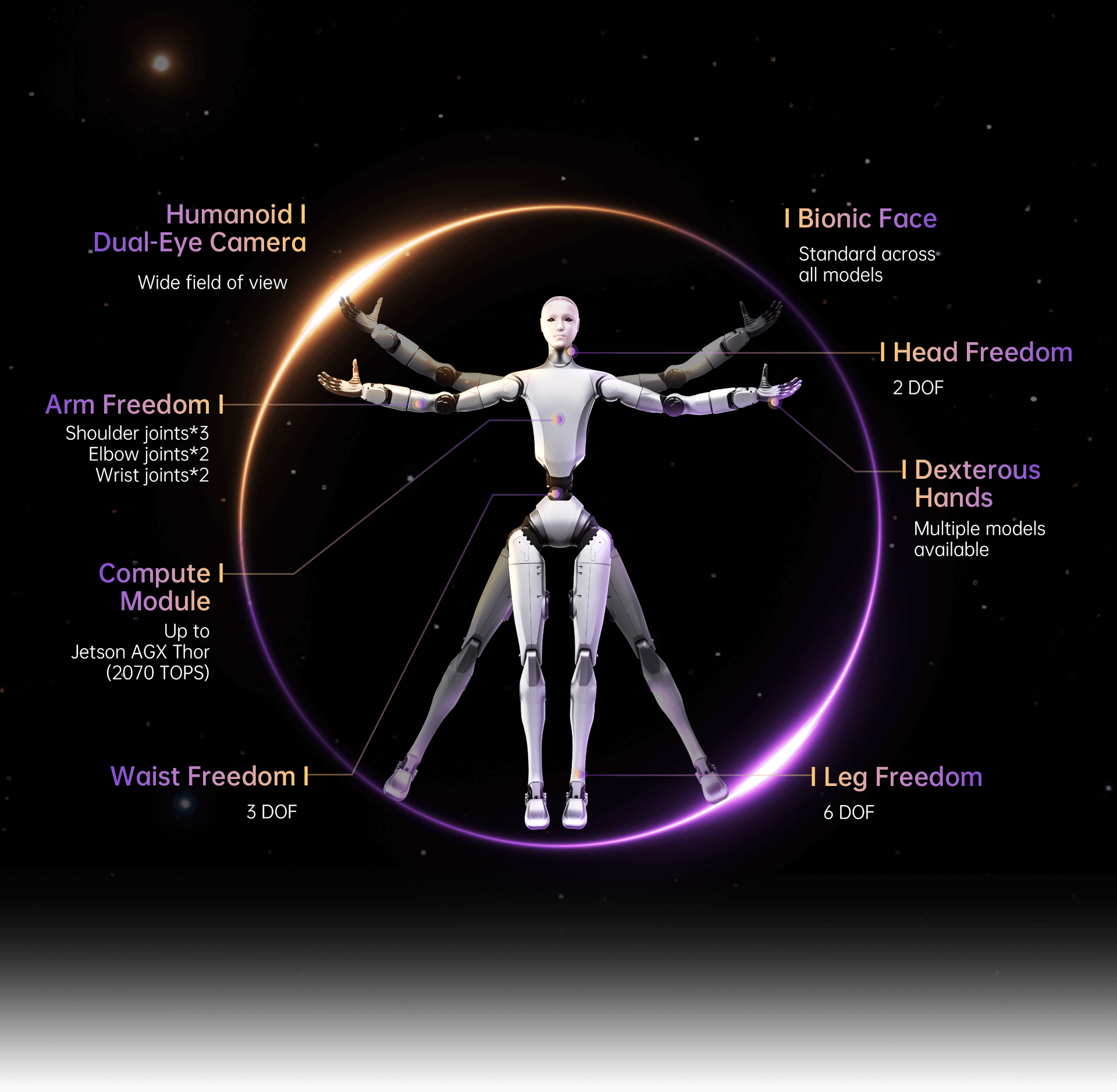
The Unitree H2 is Unitree Robotics’ latest bionic humanoid robot, representing a major step forward in humanoid mobility, balance, and real-world applicability. Designed with advanced motion control, lightweight materials, and AI-driven perception, the H2 demonstrates how humanoid robots are moving from research labs into practical scenarios.
This review explores the design, performance, intelligence, and potential use cases of the Unitree H2.
🤖 Design and Build Quality
The Unitree H2 features a bionic humanoid structure that closely resembles human proportions. Its lightweight yet robust frame allows for smooth, natural movement while maintaining structural stability.
Key design highlights include:
-
High-strength lightweight materials for improved agility
-
Compact actuator design with high torque output
-
Modular joint architecture for easier maintenance and upgrades
Compared to earlier humanoid prototypes, the H2 feels more refined, practical, and production-oriented.
🚶 Mobility and Motion Performance
One of the most impressive aspects of the Unitree H2 is its dynamic locomotion ability. The robot demonstrates stable walking, fast stepping, and adaptive balance across uneven surfaces.
Performance observations:
-
Smooth bipedal walking with reduced energy consumption
-
Rapid posture recovery when disturbed
-
Coordinated upper and lower body movement
Thanks to Unitree’s expertise in legged robotics, the H2 inherits motion control algorithms originally developed for their quadruped robots, resulting in exceptional balance and responsiveness.
🧠 Intelligence and AI Capabilities
The Unitree H2 is not just mechanically advanced—it is built as an AI-ready humanoid platform. The robot supports:
-
Visual perception through multi-sensor integration
-
Autonomous navigation and obstacle avoidance
-
Compatibility with ROS and AI development frameworks
This makes the H2 particularly attractive for developers working on reinforcement learning, embodied AI, and human-robot interaction.
🔧 Use Cases and Applications
The Unitree H2 is well-suited for a wide range of professional and experimental applications:
-
Robotics Research & Education 🎓
-
AI Algorithm Training 🧪
-
Human-Robot Interaction Studies 🤝
-
Industrial and Service Robotics Prototypes 🏭
While not yet a consumer product, the H2 serves as a powerful development platform for the next generation of humanoid applications.
⚖️ Strengths and Limitations
Strengths
-
Excellent balance and locomotion performance
-
Competitive pricing compared to similar humanoid robots
-
Strong developer ecosystem and open architecture
Limitations
-
Limited battery life under intensive motion tasks
-
Still primarily aimed at research and enterprise users
-
Real-world autonomy depends heavily on custom AI development
🔮 Final Verdict
The Unitree H2 stands out as a highly capable bionic humanoid robot that balances performance, affordability, and openness. It reflects Unitree Robotics’ ambition to accelerate humanoid robot adoption by lowering cost barriers while maintaining advanced functionality.
For research institutions, AI developers, and robotics companies, the Unitree H2 is a compelling platform that showcases the future of embodied intelligence.